
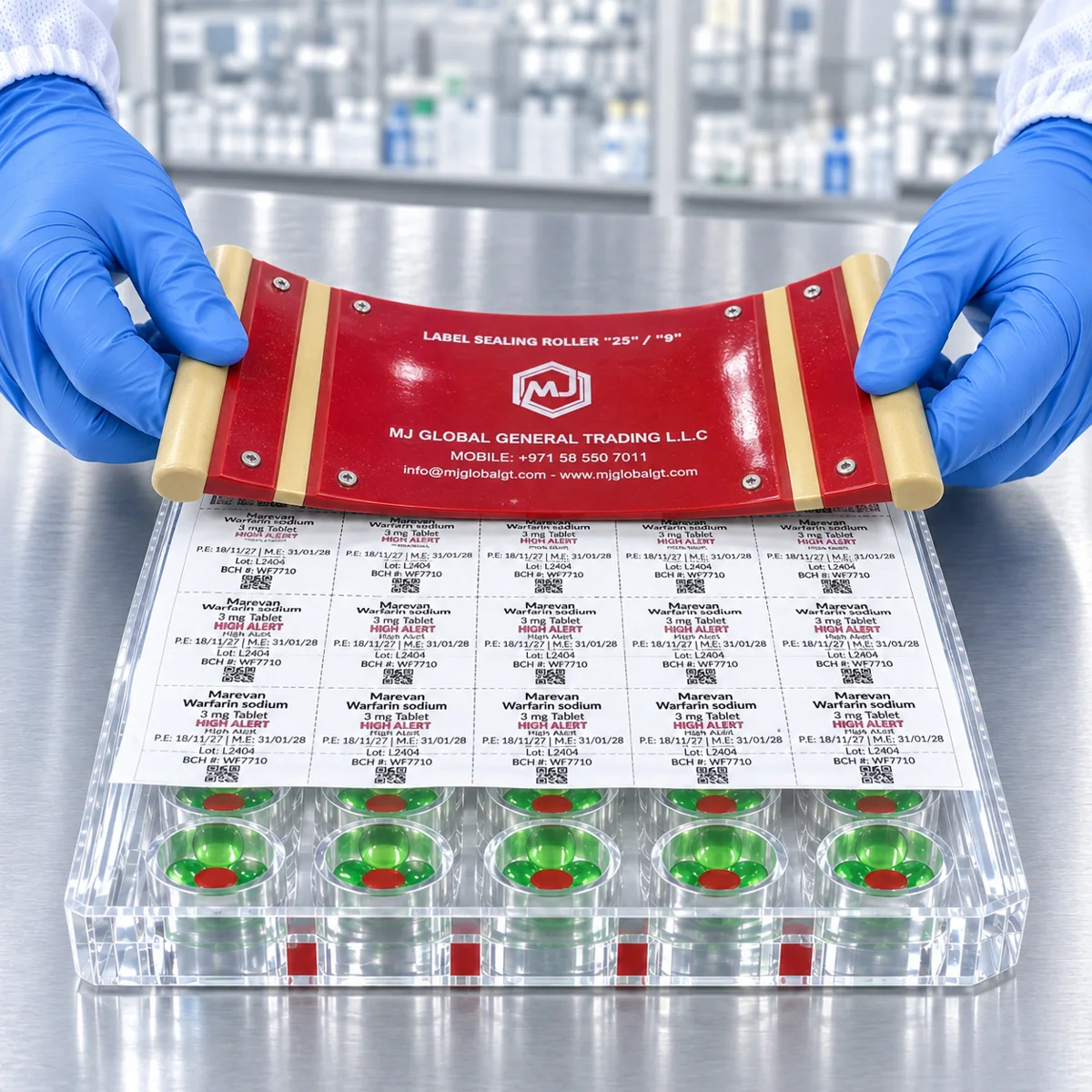
Most hospital pharmacies agree that single doses are the safest way to send oral medicines to the ward. The hard part is usually the equipment: automatic packaging machines are large, need power, maintenance and trained staff, and stop the line when they break. This guide explains what a unit-dose system needs, and how a pharmacy can run one with simple tools at room temperature.
What counts as a unit-dose system
The American Society of Health-System Pharmacists (ASHP) describes the same basic elements for every unit-dose system: medicines are contained in single-unit packages, they are dispensed in a form that is as ready to administer as possible, and for most medicines no more than a 24-hour supply is kept in the patient-care area at any time.
ASHP’s minimum standard for hospital pharmacies adds that, whenever possible, medicines for inpatients should be available in single-unit packages, that handling by the final user (such as splitting tablets or labelling containers) should be minimised, and that unit-dose packages should carry a bar code that is used through dispensing and administration.
Why it matters
In its statement on unit-dose distribution, ASHP lists the advantages reported over decades of studies, including:
- fewer medication errors
- lower total cost of medication-related activities
- better use of pharmacy and nursing time
- better drug control and monitoring, and smaller ward stocks
- easier links to computer and barcode systems
The four steps, without a machine
A cold-seal system replaces the machine with a tray, a printed label sheet and a hand roller. The workflow is the same every time:
- Fill: place the blister sheet in the tray and put one dose in each cup.
- Cover: print the labels from the label software and lay the label sheet over the filled cups.
- Seal: rock the curved sealing roller across the sheet so the label closes every cup.
- Separate: tear along the perforations. Each dose now carries its own name, strength, batch, expiry and barcode.
What to check before you choose
- Label content: drug name, strength, form, batch, expiry and a scannable barcode on every single dose.
- Barcode quality: test the printed labels with the scanners your wards already use.
- Blister sizes: small, medium and large cups cover most tablets and capsules.
- Records: a log label or report for each sheet makes checks and audits easier.
- Local support: samples, on-site training and fast resupply in the UAE.
Sources
- ASHP Statement on Unit Dose Drug Distribution (Am J Hosp Pharm, 1989)
- ASHP Guidelines: Minimum Standard for Pharmacies in Hospitals
- ASHP Technical Assistance Bulletin on Hospital Drug Distribution and Control
This article is general information for healthcare professionals. Always follow your hospital policy, the product information and the advice of your pharmacist.